

Table of Contents
ToggleFor many B2B procurement professionals newly entering the manufacturing, construction, or food machinery industries, selecting the correct stainless steel material is a critical yet daunting task. Facing a variety of material grades and complex surface treatments, a slight misjudgment can lead to cost losses or delivery delays. This guide provides a professional analysis to help you make the most reliable procurement decisions.

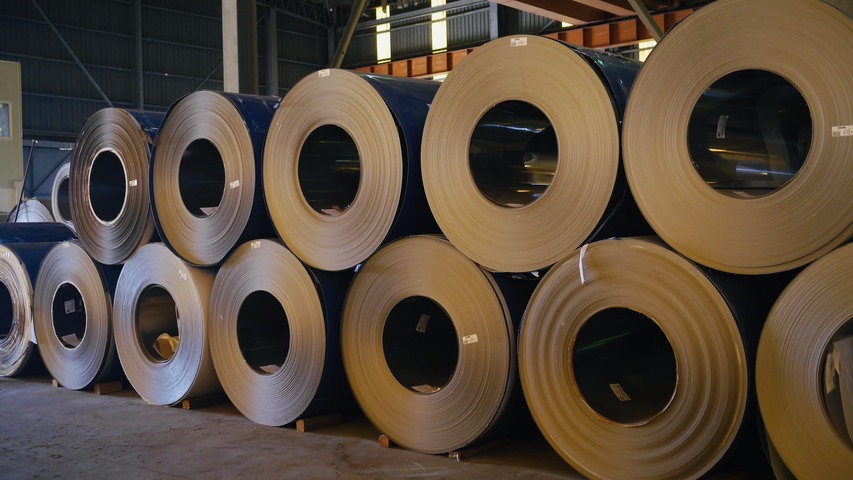
Why Choosing the Right Stainless Steel Material is Key to Reducing Corporate Risk?
Stainless steel materials are widely used in equipment enclosures, food piping, and architectural decoration; their core value lies in corrosion resistance and high strength. However, “stainless” is not absolute. If the environment and material are mismatched, companies will face significant hidden costs.
Procurement Advice
You must first confirm the operating environment (e.g., presence of strong acids or proximity to the coast) before deciding on the steel type.SUS 304
The most versatile stainless steel material, suitable for most general environments.SUS 316L
Contains Molybdenum (Mo), offering superior corrosion resistance; it is the top choice for chemical environments and coastal equipment.SUS 430
Magnetic and affordably priced, suitable for interior parts in dry environments.
In-depth Analysis: Material Characteristics and the “Magnetism” Scientific Myth
“Is stainless steel material that attracts a magnet a fake?” This is the most common misconception among novice buyers.
1. The Difference Between Austenitic and Ferritic Steel
Austenitic steel (such as 304/316L) is typically non-magnetic in a solution-treated state. However, after undergoing slitting or cold rolling, the atomic structure shifts, producing “strain-induced martensite,” which results in weak magnetism. This does not indicate a quality issue.
2. Selection Decision
When selecting stainless steel material, priority should be given to “corrosion resistance requirements” rather than a “magnetism test.” For digital marketers or junior buyers, requesting an MTC (Mill Test Certificate) from the supplier is the most scientific method of verification.
Processing Details: How Slitting Precision Affects Cost?
In the eyes of stainless steel slitting, shearing, and grinding experts, the value of stainless steel material lies not only in its composition but also in its processing precision.
The Impact of Precision Slitting Technology
“In precision manufacturing, a 1mm error often represents a loss of hundreds of thousands of dollars.” If the slitting precision of stainless steel material is insufficient, resulting in burrs, it will accelerate damage to expensive automated molds.
- Width Tolerance: High-quality slitting should be controlled within an extremely narrow range to ensure smooth material feeding.
- Edge Treatment: Burr-free cutting can increase the utilization rate of downstream production lines by more than 15%.
How to Verify Stainless Steel Quality via MTC Reports?
A professional stainless steel material Mill Test Certificate (MTC) includes the following key points:
- Chemical Element Analysis: Checking if the ratio of Chromium (Cr) and Nickel (Ni) complies with ASTM or JIS standards.
- Mechanical Properties: Including tensile strength and elongation, which determine whether the material will fracture during bending or processing.
- Heat Treatment Status: Ensuring stable physical properties of the material to avoid deformation during processing.
Three Core Criteria for Selecting Quality Suppliers
When choosing a stainless steel material partner, do not look at the quote alone; evaluate their technical depth.
- Processing Capability: Do they have in-house slitting and grinding equipment to provide customized specifications?
- Quality Traceability: Can they provide complete documentation of the raw material’s origin?
- Service Flexibility: Do they understand the delivery pressure and Minimum Order Quantity (MOQ) requirements of B2B procurement?
Expert Tip: GennHann Stainless Steel specializes in serving the B2B manufacturing industry. We understand the pain points of buyers and provide one-stop solutions from material selection advice to precision processing.
Frequently Asked Questions (FAQ)
Q: What is AIO, and is it related to stainless steel material procurement?
A: In this context, AIO refers to All-In-One service. For buyers, choosing a supplier that offers integrated “slitting, cutting, polishing, and delivery” services significantly simplifies communication and reduces the risks associated with multi-party coordination.
Q: How do I determine if a quote is reasonable?
A: Stainless steel material prices fluctuate based on international nickel prices. We suggest that buyers not only compare unit prices but also confirm whether the quote includes taxes, freight, and special surface protection films.
Q: What is the typical lead time for slitting processing?
A: It depends on specifications and quantity; standard specs usually take about 3-5 working days. GennHann Stainless Steel is familiar with B2B lead time management and can provide flexible scheduling for urgent needs.
Conclusion: Let Expertise Be Your Strongest Support in Procurement
Take Action Now to Optimize Your Supply Chain:
- Get a Precise Quote: Attach your specification requirements, and our experts will provide the most cost-effective procurement plan within business hours.
- Book a Technical Consultation: If you have special processing needs, call our consultation hotline for one-on-one optimization advice for your automated production line.
GennHann Stainless Steel Enterprise Co.,Ltd
Tel: 886-6-6935632
Fax: 886-6-6935633
Email:info@ghinox.com