Table of Contents
ToggleIn the world of metallurgy, few materials are as ubiquitous as the 300-series austenitic stainless steels. Among them, SUS 304 and its low-carbon variant, 304L, stand as the backbone of modern infrastructure, food processing, and chemical engineering.
However, for procurement officers, engineers, and digital marketers in the steel industry, a recurring question persists: “Is the ‘L’ really worth the investment?” Understanding the 0.05% difference in carbon content is not just a technicality—it is the difference between a product that lasts decades and one that fails due to catastrophic corrosion within months.
The Anatomy of an Extra Letter: What Does the “L” Mean?
Definition and Chemical Composition
The “L” in 304L stands for “Low Carbon.” While both are austenitic chromium-nickel alloys, the primary distinction lies in their carbon threshold.
Element | SUS 304 (Standard) | SUS 304L (Low Carbon) |
Carbon (C) | Max 0.08% | Max 0.03% |
Chromium (Cr) | 18.0% – 20.0% | 18.0% – 20.0% |
Nickel (Ni) | 8.0% – 10.5% | 8.0% – 12.0% |
Manganese (Mn) | Max 2.0% | Max 2.0% |
While 0.05% seems negligible, it fundamentally alters how the steel behaves under the extreme heat of a welding torch. 304L is specifically engineered to provide better intergranular corrosion resistance after welding compared to standard 304.
Solving the “Sensitization” Nightmare
What is Intergranular Corrosion?
As a specialist in shearing and surface finishing, I often see 304 welds failing in coastal or acidic environments. This is usually due to Sensitization.
When standard 304 is heated to the “sensitizing” range (425°C to 850°C) during welding, carbon atoms migrate to the grain boundaries and react with chromium to form chromium carbides. This creates “chromium-depleted zones” along the grain boundaries. Without enough chromium (less than 12%) to form a protective passive layer, the steel becomes vulnerable to localized rusting right next to the weld.
The 304L Advantage
304L is designed to prevent this carbide precipitation. Because there is so little carbon available (≤ 0.03%), the chromium remains evenly distributed throughout the alloy.
- No Post-Weld Annealing: Unlike 304, which may require expensive heat treatment after welding to “re-dissolve” carbides, 304L can be used immediately after welding without losing its corrosion resistance.
- Superior for Heavy Gauges: 304L is often preferred for heavy-gauge welded components where the metal stays in the critical temperature range longer during the welding process.
Mechanical Strength: Does Low Carbon Mean “Soft”?
Tensile and Yield Strength Comparison
In metallurgy, carbon acts as a strengthening agent. Consequently, by reducing the carbon content, 304L experiences a slight decrease in mechanical strength.
- 304 Strength: Standard 304 has a slightly higher tensile strength, typically around 515 MPa.
- 304L Strength: 304L typically hovers around 485 MPa.
Processing Insights: Slitting and Shearing
From a processing perspective, 304L is more ductile. When we perform precision slitting or shearing:
- Tool Wear: 304L is generally “kinder” to our cutting blades due to its slightly lower hardness.
- Springback: During bending or forming, 304L exhibits different springback characteristics than 304.
- Surface Polishing: In our grit-polishing (No.4/Hairline) department, both materials take a finish beautifully, though 304L is occasionally favored for deep-drawn parts because it is less likely to work-harden aggressively.
Processing Insights: Slitting and Cutting
From a processing perspective, 304L is more ductile. When we perform precision slitting or shearing:
- Tool Wear: 304L is generally “kinder” to our cutting blades due to its slightly lower hardness.
- Springback: During bending or forming, 304L exhibits different springback characteristics than 304.
- Surface Polishing: In our grit-polishing (No.4/Hairline) department, both materials take a finish beautifully, though 304L is occasionally favored for deep-drawn parts because it is less likely to work-harden aggressively.
Practical Application Scenarios
When to Choose SUS 304
304 is the “workhorse” of the industry. Use it for general, high-strength applications where welding is minimal or the environment is not highly corrosive.
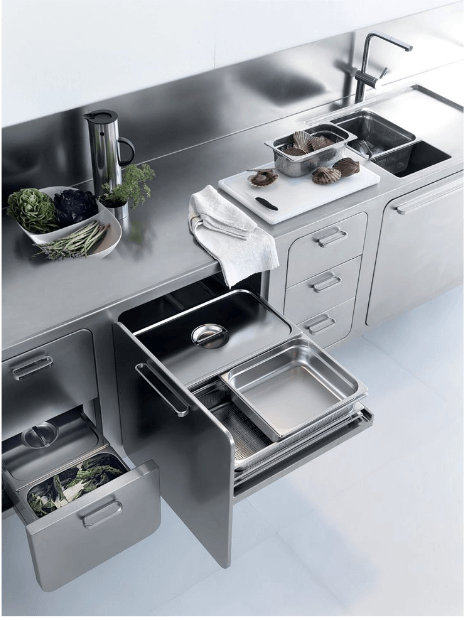
- Kitchen Equipment: Sinks, counters, and appliances.
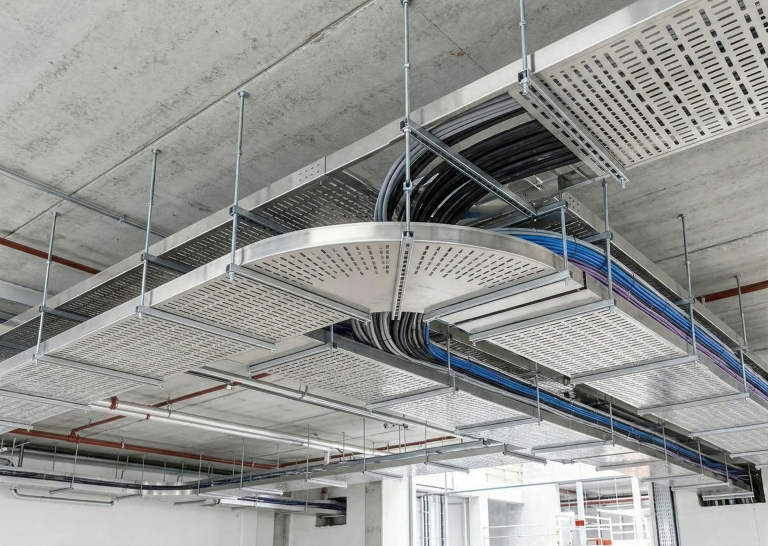
- General Construction: Indoor handrails, decorative panels, and structural components.
- Fasteners: Bolts and nuts that require higher tensile strength.
When to Choose SUS 304L
304L is the “safety net” for industrial integrity. Choose it when welding is necessary to avoid post-weld corrosion.
- Chemical Storage & Pipelines: Where heavy welding is required to handle aggressive fluids.
- Coastal Infrastructure: Outdoor structures exposed to salt spray and high humidity.
- Pressure Vessels: Heavy-gauge components that must maintain integrity under high stress and heat.
Cost Considerations and Market Trends
Is 304L more expensive? Generally, yes. The manufacturing process required to lower the carbon content to such extreme levels (AOD or VOD refining) is more energy-intensive. However, many modern mills now produce “Dual Certified” stainless steel, which meets the low-carbon requirements of 304L while maintaining the strength of 304.
Expert Tip: Always check your Material Test Report (MTR). If your project requires high strength AND heavy welding, dual-certified 304/304L is your best bet.
Frequently Asked Questions (FAQ)
Q: Can I replace 304 with 304L for my project? A: In most cases, yes. 304L offers superior corrosion resistance in welded areas. However, if your design relies on the maximum tensile strength of 304 (515 MPa), you must verify that the slightly lower strength of 304L (485 MPa) is still within your safety margin.
Q: Does 304L look different after Hairline (HL) polishing?
A: No. To the naked eye, the surface finish on 304 and 304L is identical. The difference is purely chemical and internal.
Q: Why is 304L preferred for “heavy-gauge” components? A: Thick plates take longer to weld and cool down. This extended time in the 425°C–850°C range increases the risk of sensitization in standard 304. 304L eliminates this risk entirely.
Conclusion: Making the Final Decision
The choice between 304 and 304L boils down to two factors: Welding and Environment.
- Use 304 for general-purpose, high-strength structural components where minimal welding is needed.
- Use 304L for heavy welding, chemical exposure, or coastal applications where avoiding post-weld corrosion is critical for safety and longevity.
As your partner in stainless steel slitting and processing, we ensure that whichever grade you choose, it is sheared to precision and finished to the highest standards
“Ready to Optimize Your Material Selection?”
Choosing between 304 and 304L involves more than just comparing numbers—it’s about ensuring the longevity and safety of your specific project. Whether you require high-precision slitting, custom shearing, or premium surface finishing, our team of stainless steel experts is here to provide the technical support you need.
Don’t let post-weld corrosion compromise your quality. Contact us today for a professional consultation or a customized quote tailored to your industrial requirements!