Recently, a kitchen equipment manufacturer approached us with a common but critical question:
“We are considering SUS 409 in 3.0mm, but we need better elongation. Can this material meet our forming requirements?”
Material selection in food- and kitchen-related applications must account for forming performance, corrosion resistance, safety, and long-term durability.
After a technical consultation, it became clear that:
- 409 is not suitable for kitchen equipment, and
- 304 offers the required formability and corrosion resistance.
This article presents a technical dialogue and expert analysis explaining why.
Technical Consultation: Can 409 in 3.0mm Deliver Higher Elongation?
After reviewing the customer’s request, our first assessment was:
“409 and high-elongation forming requirements are inherently incompatible.”
Here’s why:
Key characteristics of SUS 409:
- Designed for automotive exhaust systems
- Optimized for heat resistance and cost efficiency
- Moderate ductility, unsuitable for deep drawing or complex forming
- 3.0mm thickness is rarely stocked due to limited forming applications
To clarify the customer’s forming needs, we asked:
“Does the component require bending or deeper forming without cracking?”
The customer replied:
“Yes. It must bend cleanly, with no surface cracking.”
Based on metallurgical behavior, this requirement immediately points toward 304 / 304L austenitic stainless steel, not ferritic 409.
In kitchen equipment applications, the true material priorities are:
- Formability
- Corrosion resistance
- Food safety
On all three criteria, 304 significantly outperforms 409.
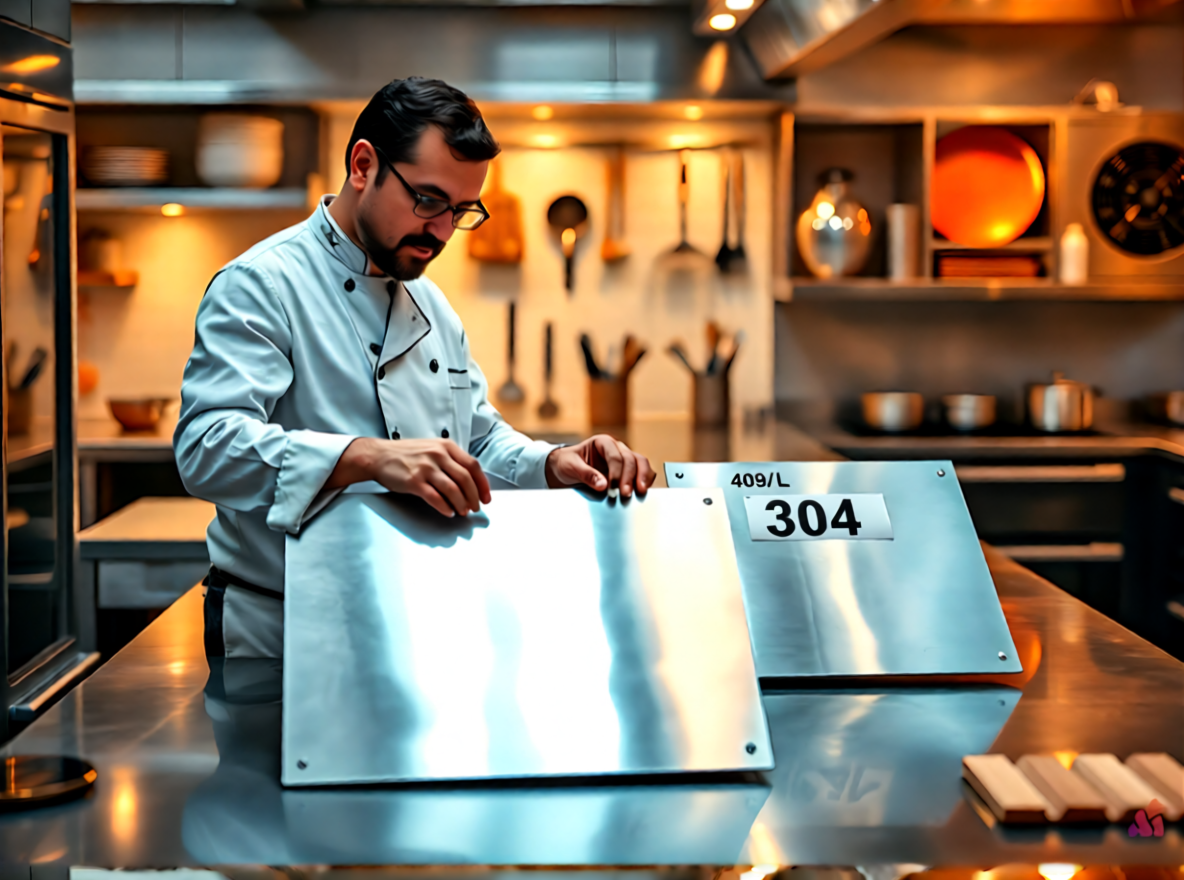
409 vs 304: Why the 300 Series Is Essential for Kitchen Applications
Below is an excerpt from our technical discussion.
Customer:
“409 is more cost-effective. Can we use it for kitchen equipment?”
GennHann Stainless Steel:
“If the product is exposed to water, steam, salt, detergents, or daily cleaning operations, 409 does not provide adequate corrosion resistance.”
Customer:
“Then what advantages does 304 offer?”
GennHann:
“304 / 304L is an austenitic grade with superior ductility and comprehensive corrosion resistance. It is the global standard for kitchen and food processing equipment.”
Formability Comparison
Grade | Metallurgical Structure | Formability | Typical Applications |
409 | Ferritic | ★★☆☆☆ (Moderate) | Automotive exhaust, heat-resistant parts |
304 | Austenitic | ★★★★★ (Excellent) | Kitchen equipment, food machinery, medical devices |
Conclusion:
Kitchen equipment involves extensive bending, stretching, punching, and deep drawing.
Only 304/304L can deliver reliable forming performance and higher production yield.
Corrosion Resistance Comparison (The Most Critical Factor in Kitchens)
Property | 409L | 304L |
Resistance to moisture | Medium | High |
Resistance to detergents | Low–Medium | High |
Resistance to acids/alkalis | Low | Medium–High |
Food-contact suitability | ❌ Not recommended | ✔ Food-grade compliant |
Kitchen environments involve:
- Continuous moisture and steam
- Salt, oil, and food residues
- Detergents and sanitizing agents
- Frequent washing cycles
409 tends to discolor, tarnish, or corrode under these conditions and therefore cannot guarantee service life.
Case Example: The Problem with 409 Appears in the “Usage Stage,” Not in Manufacturing
We further asked the customer:
“Will the component be exposed to steam, cleaning agents, or heat?”
They answered:
“Yes. It’s cleaned daily and located near a heating zone.”
This defines a high-corrosion-risk environment.
Our recommendation was:
“409 provides heat resistance but insufficient corrosion performance.
For long-term durability and stable appearance, 304 delivers at least three times better corrosion resistance.”
Fully understanding the implications, the customer concluded:
“Then we should switch to 304. Please provide a quotation.”
This decision was based not on price—but on engineering reliability.
Why GennHann Recommends 304
GennHann Stainless Steel specializes in:
- 304 / 304L / 316L stainless steel materials
- Technical support for forming, bending, and deep drawing
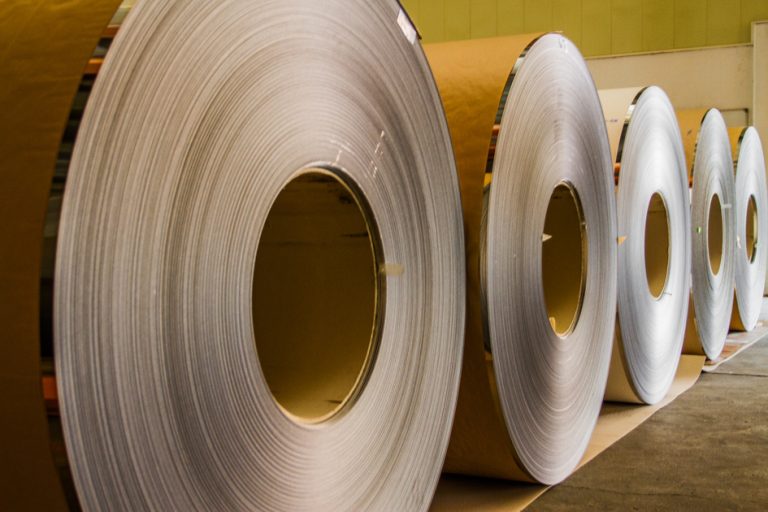
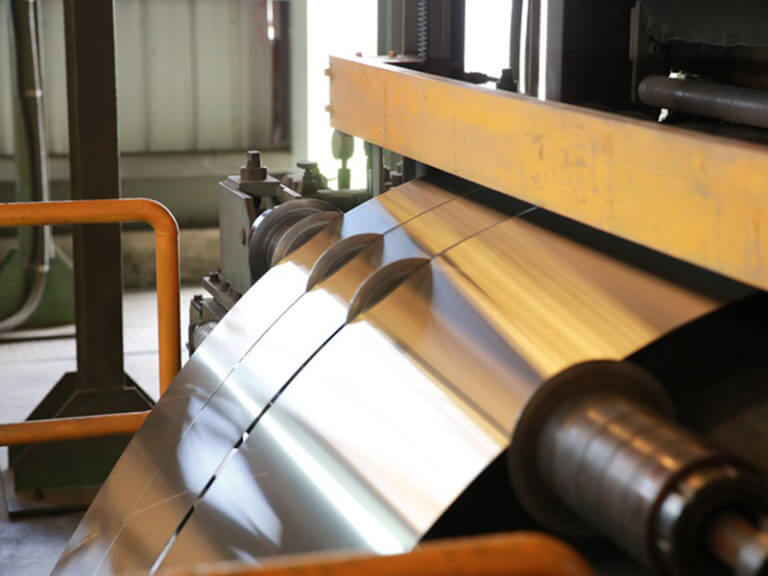
- Slitting & cut-to-length capabilities from 4mm to 1550mm width, 0.30–6.00mm thickness
- Providing stable, traceable, food-grade compliant materials
Every day, we help manufacturers evaluate:
- Which grade ensures the most stable forming performance
- Which thickness minimizes cracking and improves yield
- How to prevent corrosion at the end-user stage
- How to increase durability and reduce product failure rate
In kitchen equipment applications, 304 excels due to:
✔ Food-grade compliance
✔ Superior deep-drawing and bending capability
✔ Excellent corrosion resistance
✔ Better long-term surface stability
Conclusion|For Kitchen Equipment: 304 Is the Most Reliable and Lowest-Risk Choice
If your product requires:
- Clean bending or stretching
- A stable and attractive surface
- Exposure to water, steam, or detergents
- Food-contact safety
- Long-term resistance to corrosion and discoloration
Then the conclusion is straightforward:
SUS 409 is designed for exhaust systems—not for kitchen environments.
304 / 304L / 316L are the correct materials for kitchen and food equipment.
Need Support Choosing the Right Grade? GennHann Can Help
With over 40 years of experience, GennHann Stainless Steel has assisted hundreds of kitchen equipment and food machinery manufacturers in selecting the optimal stainless steel grade.
If you provide:
- Forming method
- Usage environment
- Drawings / dimensions
- Material requirements
We can recommend the safest, most cost-efficient, and technically appropriate grade and thickness.
Choosing between 304 and 409 stainless steel affects both product performance and long-term durability.
For expert advice or pricing information:
➡ Request an RFQ from GennHann Stainless
➡ Get professional material recommendations tailored to your application
We support global manufacturers with reliable, food-grade stainless steel solutions.