Table of Contents
ToggleIntroduction: The Invisible Foundation Determining Engineering Lifespan
On the blueprints of large-scale infrastructure or industrial parks, eyes often rest on the most prominent equipment: generators, transformers, server racks, and smart control panels. However, the systems truly interconnecting these critical components—ensuring the stable flow of power and data—are often the Cable Management Systems installed in ceilings, pipe galleries, basements, or offshore platforms.
For many, cable trays and ladders may seem like mere “accessories”. But for procurement managers, project engineers, and O&M supervisors on the front lines, the reality is clear: if a cable tray fails due to corrosion or structural fatigue, the loss is not just a few metal components. It results in power plant shutdowns, data center outages, safety accidents, and incalculable downtime costs.
In high-salinity offshore platforms, corrosive chemical plants, or hygienic food and pharmaceutical lines, selecting the right material is no longer just a “specification issue”. It is a core factor in whether a project can operate smoothly for 10, 20, or even more years.
Stainless steel has become a global mainstream choice due to its superior corrosion resistance, mechanical strength, and processability. This article focuses on the differences and advantages of SS304 and SS316L in cable tray applications.
Decoding the Four Main Types of Stainless Steel Cable Tray
The correct way to plan a system is to first clarify the “structure and application scenario” before deciding on the material grade.
- Cable Ladder: The Backbone of Heavy Industry
The cable ladder is the “backbone” for heavy-duty cable routing. Its structure consists of two side rails and multiple rungs.
- Applications: Suitable for large-section power cables. Commonly found in power plants, oil and gas facilities, heavy industrial plants, and tunnels.
- Mechanical Challenges: Side rails and rungs must withstand long-term vertical loads, dynamic loads from motor startups, and vibration-induced fatigue.
- Material Focus: For outdoor or maritime environments, 316L is preferred for its resistance to pitting and crevice corrosion in chlorine-rich environments. The low-carbon grade (316L) also reduces the risk of intergranular corrosion in weld zones.
- Perforated Cable Tray: Balancing Heat Dissipation and Protection
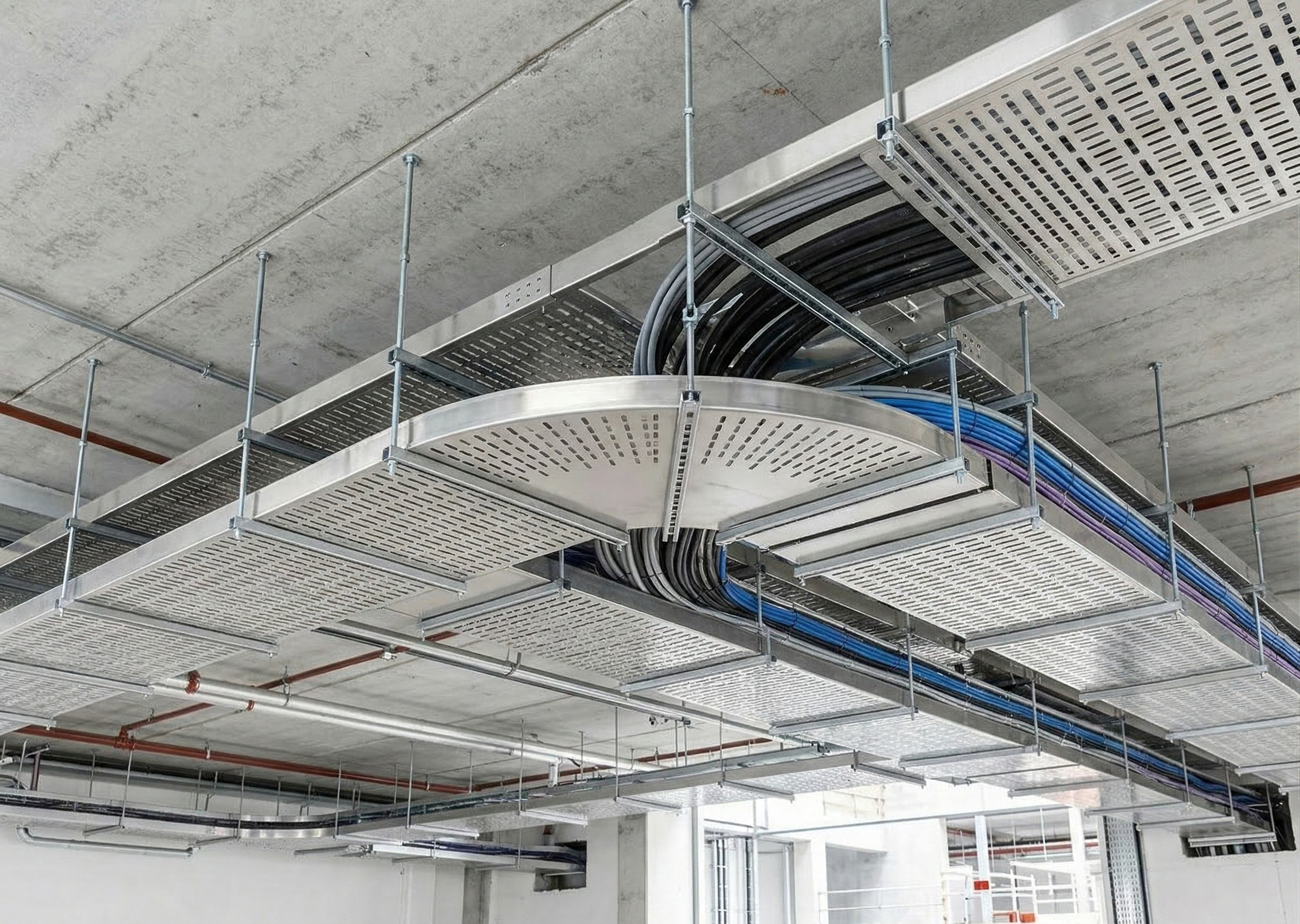
Perforated trays feature regular stamped openings for load-bearing, ventilation, and drainage.
- Applications: Ideal for medium-load power, control, and communication lines in commercial buildings, industrial plants, and data centers.
- Corrosion Challenges: Stamping exposes fresh metal surfaces. If the steel contains high impurities, the edges of the holes become starting points for pitting.
- Genn-Hann Advantage: We supply high-purity stainless steel strips that maintain smooth hole edges after stamping, facilitating the formation of a natural passive film. This also protects cable jackets from being scratched during installation.
- Solid Bottom Cable Tray (Trunking): A Shield for Delicate Wiring
Also known as enclosed trays, these provide the highest level of physical protection with a solid base.
- Applications: Used where electromagnetic interference (EMI) protection, cleanliness, or physical shielding is required, such as precision instruments and cleanrooms.
- Hygienic Requirements: In food and pharma lines, internal surfaces must be smooth and easy to disinfect. Both 304 and 316L support polishing to specific roughness (Ra) levels to comply with GMP and HACCP standards.
- Selection: 304 is the baseline for indoor environments; 316L is recommended for areas using acidic/alkaline cleaners or near coastal high-salt spray zones.
- Wire Mesh Cable Tray: Flexibility for Data Centers
Wire mesh trays have become vital in data centers and smart buildings due to their light weight and ease of on-site adjustment.
- Applications: Server rooms and office weak current systems for telecommunication and control lines.
- Material Focus: Weld quality at wire intersections is core to safety. Using low-carbon 316L wire reduces the risk of embrittlement and intergranular corrosion in the heat-affected zone.
304 vs. 316L — The Procurement Manager’s Trade-off
While many bid documents list both, the differences significantly impact lifespan and risk management.
- SS304: The Economical Standard
Known as 18-8 stainless steel (18% Chromium, 8% Nickel), 304 is the most widely used austenitic grade.
- Pros: Lower cost than 316L, stable supply, and excellent welding/forming performance.
- Best For: Commercial buildings, dry indoor environments, and low-corrosion industrial plants.
- Warning: Pitting risk increases significantly near coastlines, swimming pools, or areas using chlorine bleach.
- SS316L: The Guardian of Harsh Environments
316L adds 2–3% Molybdenum (Mo) and reduces carbon content to below 0.03%.
- Value of Molybdenum: Greatly enhances resistance to pitting and crevice corrosion in chloride environments (maritime and chemical exposure).
- Significance of “L” (Low Carbon): Reduces chromium carbide precipitation during welding, preventing intergranular corrosion. This ensures long-term stability for systems requiring on-site welding or modification.
- TCO (Total Cost of Ownership): While 316L has a higher unit price, its 10–20 year TCO is often lower due to reduced maintenance, fewer replacements, and avoided downtime in critical facilities like power plants and data centers.
Why Supplier Expertise Determines Project Success
Beyond the material grade, a supplier’s quality assurance and technical service are what truly matter.
- Material Traceability: Every batch of Genn-Hann steel comes with a Mill Test Certificate (MTC) compliant with EN 10204 3.1, detailing chemical composition and mechanical properties. This is vital for project audits and risk management.
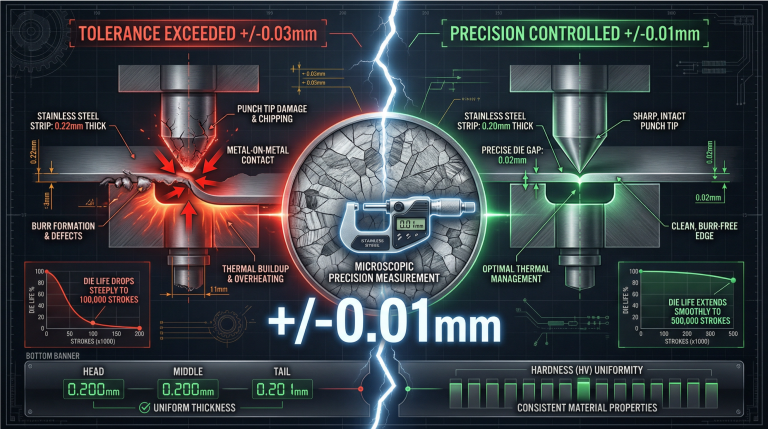
- Precision Tolerance Control: In automated production lines, precise thickness and flatness tolerances prevent mold wear and ensure consistent load-bearing capacity and hole alignment.
- Passivation and Surface Treatment: The “stainless” quality depends on a thin chromium oxide passive film. We provide guidance on pickling and passivation based on your post-processing (laser cutting, welding) to ensure the film’s self-healing ability is maximized.
FAQ — Answering Top Procurement Concerns
- Q1: Why is 316L so much more expensive?
- A: The cost difference is primarily due to the Nickel and Molybdenum content. In high-corrosion environments, 316L pays for itself by extending the replacement cycle.
- Q2: Hot-Dip Galvanized (HDG) or Stainless Steel?
- A: HDG relies on a sacrificial zinc layer. Once damaged or aged, corrosion accelerates. Stainless steel provides material-wide resistance. For C4/C5 environments, 316L is preferred for long-term reliability.
- Q3: Why Low Carbon (L-grade) for welding?
- A: Standard carbon grades risk “chromium depletion” at grain boundaries during welding (450–850°C). Low-carbon grades (304L/316L) eliminate this risk.
- Q4: How to distinguish 304 and 316 on-site?
- A: Appearance is not a reliable indicator. Professional methods include handheld XRF spectroscopy or chemical reagent tests, matched with the supplier’s MTC documents.
Conclusion: Choose Genn-Hann Stainless Steel, Choose Time-Tested Reliability
In an era of fluctuating raw material prices, engineering teams need a partner who understands standards like IEC 61537 and NEMA VE 1. With over 40 years of experience in international trade and material supply, Genn-Hann Stainless Steel provides tailored 304/316L solutions for coastal, industrial, or high-tech cleanroom projects.
Contact us today to ensure the long-term integrity of your cable management systems.